
Category Archives: Uncategorized

2009: Let’s make it the Year of the User

2008 was a year of reckoning.  The chickens came home to roost.  Our bad behavior, from a rowdy adolescence in the 90s to the reckless drunkenness of the new century, boomeranged.

The great thing about our way of counting days gives us 365 new ones to either continue the orgy or return to sensible fun and frolic.  For me, like most people, the latter includes a balance of work and play, success and failure. 
Images

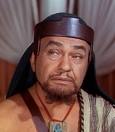
Remember that scene in The Ten Commandments when Moses comes down from Mount Sinai to find the Israelites partying in front of the golden calf created by Dathan from all their gold?  We're having a similar moment.

It's time to start from scratch. 

For those of us in technology and particularly in the online corner, we can discipline ourselves to put the user first.  If we're startups looking to leverage the Web for social purposes or to introduce new tools, we can dedicate ourselves to putting the user first.  If we're bankers or brokers, we can be the first to admit that the past years were never about making everyone wealthy, they were about participating in an institutional practice of elitism.  If we're government types, we can acknowledge that we have crumbling physical and financial infrastructures because we abandoned that rarely-used descriptor, civil service. 

We can all examine the past years and learn what we must — including the invaluable lessons taught by countless leaders who sacrificed and saved — to make this the first year of a new historical period.  The Year of the User.  A focus on our customers, clients and stakeholders will save us not only from the navel-gazing and the poor-me-ing, that focus will point us to higher levels of innovation and performance.  Because when we think about what our buyers value and need, we counteract the all too human obsession with self, and we wind up taking care of ourselves in the process.

Speeches: The Gettysburg Address was delivered 145 years ago today

Abraham Lincoln's Gettysburg Address was so significant a moment in our history that it is part of the structure of the Lincoln Memorial in Washington, DC.  President Lincoln delivered the speech 145 years ago today.  It still serves as a model of content, eloquence and direction.  The perfect speech at an imperfect time, it still serves to inspire and guide us.

Gettysburg-2

Obituaries and eulogies

Among other types of essays and articles, I save obituaries and eulogies.  That's because so many of the latter contain nuggets of wisdom or something thought provoking — a point that takes the reader to a new place.

NEW YORK magazine published three remembrances of Paul Newman, all of which are excellent.  My favorite, though, is from fellow writer Richard Russo.

There was a pivotal scene in the film Nobody’s Fool [which
Russo wrote] when Paul’s character, Sully, and his son Peter are
sitting in a car. Sully’s trying to explain why he bailed out so early
in the boy’s life, about what an abusive father his own father was. In
the screenplay, Sully went on for about a page. Paul said, “We don’t
need all that.” I said, “How’s the viewer supposed to react to the past
if it’s not explicated?” He said, “I’ll know what to do.” So I cut it
at about half. I thought I’d done my job, until I saw it afterwards.
He’d cut it down to “He was a big man. Your mother was just a little
bit of a woman. And, boy, could he make her fly.” That was all that was
left, but with the camera pushing in on his face, all that history was
in that haunted look. Paul told me, “Don’t rob me of my memory. That’s
all I have. If you share my memory with the viewer, you’re stealing it
from me, and I’ve got to have that.”

All
the time, actors want more lines, juicier lines. Paul understood that
less was more. For him, the words were often so much less important
than the physicality, the gestures. He was a dream of a physical actor.
Even as he was just eating up the camera, he never showed the slightest
interest in eating the camera.

Maybe Mr Russo tells us this story for the same reason I like it so much.  One of the first things you learn as a writer is to match your adoration for words with a ruthless ability to cut them.  Russo was not only open to that necessity in the story he relates, he was open to hearing what Mr Newman could teach him.

There is much more here, too.  The true professional retains his presence in the room not just by what he says but by what he doesn't say.  One of the most distressing — and downright annoying — aspects of the new democratization of media is the amount of unedited, unfiltered drivel that gets passed around as insight.  If we all apply the lesson taught by Paul Newman in this story, we will find the eloquence we crave.

Make sure to read the other two eulogies, by actor Philip Seymour Hoffman and director Sam Mendes, too.  They are just terrific.  And most rewarding for fans who always knew that the most attractive thing about Mr Newman's eyes were the thoughts behind them.
Images

Perspective: Economic priorities

Last evening, I was the guest of UBS for a presentation by Michael P Ryan, the investment bank's head of wealth management research for the Americas.  Mr Ryan provided an in-depth analysis of the markers of this recession/depression and his take on what we can expect going forward.

The biggest surprise of the evening was the Q&A period.  There were probably 150 people there, and every question, save one, was not about what we had just seen but about what to do with one's investments.  The one different question was about how investors could muster up the courage to invest the way they know they should — how not to give in to the emotions at play right now.  Still an investment question, but at least the questioner alluded to what caused UBS to fly Mr Ryan in from New York to do the local event.

I know.  Grow up, Mary.

I got to ask the last question.  I had been posting Mr Ryan's key points on Twitter throughout his talk, and one of my Twitter pals, a former UBS employee, gently reminded me that UBS had one of the bigger failures in Europe around the sub-prime mortgage and credit default swaps issues.  So my question was, given what had happened within banking, what did Mr Ryan see the banking industry doing to give investors the incentive and confidence to manage today's stress and move forward?

The answer was candid, in three points.  Two of them did not pertain to banking action:  government policy and the passage of time.  The third point did.  I'm paraphrasing:  the industry needs to return to the long-term view of measuring growth and seeking gain.

I remember the first time I was exposed to the pressure a public company must manage when reporting quarterly results.  I thought it was nuts.  How in the world do you grow at 20 percent every quarter? And why was that the chief measurement of a company's value, quarter after quarter?

Here's the thing.  It's not just the bankers driving these ridiculous metrics.  It's us.  When the seven to ten questions put in front of a leading research analyst are all about "my money" in the face of a global financial crisis, I think it's safe to say that we still have a long way to go in getting a grip on this situation.  Like whether we're becoming a socialist nation or what we are teaching our kids about saving. 

We have become addicted to that 20-percent-a-quarter-dividend-increase.  It's time we wrapped our heads around the fact that the only safe harbor from the devastating yet predictable end of our obsession with 20 percent growth is being happy with reasonable growth and credit with strings attached.

Leadership: Delivering bad news well

This morning, the cable news network devoted to business news and reports direct from the world's exchanges, CNBC, eloquently called for world business leaders to step forward and communicate with the public about the inherent strength of national economies and the fact that we can weather through this panic-fueled crisis.

Here in San Francisco today, one of our more visible startups, Seesmic, announced layoffs.  Seesmic is an interesting company.  It enables people to hold conversations via video, on the Web.  It is building user traction on a global basis. 

Seesmic's decision to contract occurs on a much smaller scale than something like a Lehman Brothers.  The folks affected are part of a team whose members know each other well.  When you work in a startup, the working relationships are close in a different way.  Everyone is working to build or build out an invention.

I don't know what kind of a response CNBC has received from business leaders, but I don't think anyone could do a better job than Seesmic's founder, Loic Lemeur, in showing how to deliver news candidly yet with great humanity.  And English is his second language.  Watch this or watch and read his blog post to see how one can execute one of the less attractive tasks of leadership:  delivering bad news well while confirming hope for the future.